 Login
Login Zakat Calculator
 KD
KD

News
"Sandhom"... From guidance to empowerment: Training and job opportunities for released prisoners
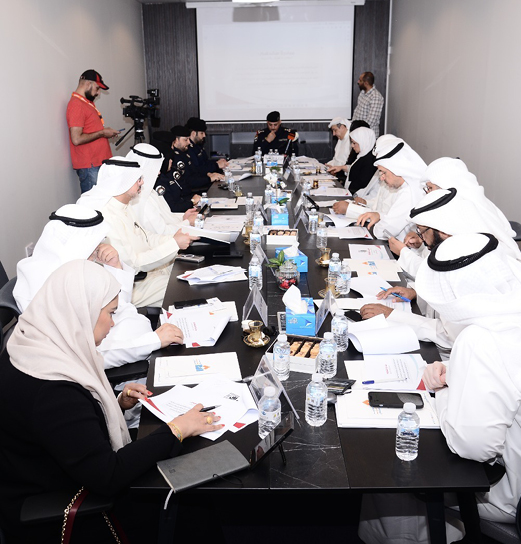
In a move that reflects the spirit of community integration and cooperation between the government and civil sectors, the Athar Center for Volunteer Work, affiliated with the Nama Charity Association, hosted an expanded meeting organized by correctional institutions as part of the "Sandhom" initiative. Representatives from the Ministry of Interior, charitable organizations, the Human Rights Bureau, the United Nations Office, and a number of partners and stakeholders attended.
This meeting comes as part of the follow-up to the second phase of the rehabilitation program for released prisoners, aiming to enhance efforts to rehabilitate and integrate them into society through integrated psychological, training, and rehabilitation programs, culminating in the provision of real job opportunities. This will ensure a stable and dignified life for them and embody the values of justice, humanity, and reform for which Kuwait is known.
Brigadier General Fahad Al-Obaid, Director General of Correctional Institutions, confirmed that the "Sandhom" initiative was launched in December 2023 with the aim of rehabilitating and training inmates of correctional institutions, both inside and outside the institution, within a comprehensive vision to reintegrate them into society and enable them to begin a stable and dignified life after their release. Al-Obaid explained that the initiative consists of three integrated phases, beginning with the psychological and counseling phase for recovery from addiction, followed by the vocational training phase for skill acquisition, and concluding with the rehabilitation phase, which focuses on providing job opportunities and facilitating inmates' integration into the labor market.
He pointed out that the correctional institutions organized a meeting today with local charitable organizations, where the results of the Sandhom initiative since its launch were presented, as well as the most prominent training and rehabilitation programs received by the released inmates. He said, "We discussed the needs of this group and ways to support them in cooperation with charitable organizations and civil society organizations, with the aim of helping them obtain real job opportunities that guarantee their psychological, social, and economic stability."
Al-Obaid emphasized that this is the first group of inmates to be supported in this comprehensive manner, a new achievement for Kuwait in the field of correctional care. He added, "We are proud that this initiative represents a qualitative and successful precedent in correctional work, and we will continue to develop it to achieve the desired humanitarian and national goals, God willing." For her part, Ambassador Ghada Al-Taher, Resident Coordinator and Representative of the Secretary-General of the United Nations in the State of Kuwait, expressed her pride in participating in the field visit to monitor the progress of the training process for the second phase of the rehabilitation program within the national "Sandhom" initiative. She emphasized that this initiative embodies Kuwait's deep commitment to the values of reform, justice, and human dignity. In a press statement today, Al-Taher said, "The field visit of the training program participants today embodies the spirit of cooperation and shared responsibility between the government, the private sector, and civil society. It affirms the commitment of the State of Kuwait, its leadership and people, to preserving human dignity and empowering people to realize their right to a decent life, including those who have stumbled in the past and are seeking to start a new page today." Al-Taher also expressed her sincere thanks and appreciation to the Ministry of Interior and the Department of Correctional Institutions for their pioneering role, praising the constructive partnership with the National Human Rights Bureau and the Human Development Society for Social Development, which worked quickly and efficiently to build strong partnerships with governmental, civil, and private entities to provide field training for released prisoners for eight weeks, which she hopes will culminate in real job opportunities.
She added, "We appreciate the support of charitable and civil society organizations, most notably the Namaa Society, the Kuwait Lawyers Association, and private sector companies, in addition to the charitable societies that have recently joined. This underscores the value of the constructive partnerships that the Kuwaiti government is keen to maintain with the civil and charitable sectors."
Ambassador Ghada Al-Taher affirmed the United Nations' full support for the Human Development Society and its reform initiatives, praising its pioneering role inside and outside Kuwait and its effective international partnerships with UNESCO in defining job descriptions and reviewing training programs according to international standards. She also commended its partnership with the United Nations Office on Drugs and Crime, in line with the Mandela Standard Minimum Rules for the Treatment of Prisoners. She pointed out that rehabilitation and training programs within correctional institutions contribute to reducing recidivism rates and enhancing societal stability and cohesion. She emphasized that giving individuals a second chance stems from the principle of enlightened justice, which builds human beings and protects society.
She concluded her statement by saying, "We strongly support this blessed initiative and hope that the third phase will be crowned with success, so that Kuwait will always be a model to be emulated in preserving human dignity and enhancing opportunities for a decent life for all."
For her part, Al-Anoud Al-Otaibi, Director of the Specialized Committees Department at the National Bureau for Human Rights, affirmed that the Bureau continues its unwavering support for the national "Sandhom" initiative, believing in the importance of developing the environment of detention centers in accordance with international human rights standards, contributing to preserving human dignity and enabling people to return to their communities in a positive manner. Al-Otaibi explained that the "Sandhem" initiative, launched in 2023, was initiated by the National Bureau for Human Rights, in strategic partnership with the Ministry of Interior and the Human Development Association for Social Development. This was complemented by fruitful cooperation between numerous state institutions, both governmental and non-governmental, as well as charitable and public benefit associations, in an integrated manner that embodies the spirit of social responsibility.
She added: "We at the Bureau deeply believe that empowering people—even if they make mistakes—is a shared duty that falls on everyone: the state, institutions, and society. This is to build a safer and more cohesive environment that rehabilitates individuals and motivates them to become active contributors to their nation."
She concluded her statement by saying: "We ask God that the "Sandhem" initiative be a sound and blessed step in the path of human rights and humanitarian action, strengthening Kuwait's position as a global center for humanitarian action and affirming its steadfast commitment to the values of mercy, justice, and human dignity."
Saad Marzouq Al-Otaibi, Chairman of the Union of Charitable Societies and Endowments, said: "As part of the Sandhom initiative and the effective community partnership between the charitable sector and state institutions, a delegation from charitable societies and endowments is visiting the Athar Volunteer Work Center to review the rehabilitation program for released inmates, which aims to reintegrate them into society and enable them to regain their roles as active and positive individuals.
Al-Otaibi emphasized that this program embodies the concept of social prevention and lays a true foundation for the reform process by rehabilitating former inmates professionally and behaviorally, providing practical paths that enhance their opportunities for integration into the labor market, and opening the doors of hope for a stable and secure life. Through this participation, charitable societies confirm that they are not limited to external relief efforts alone, but also devote great attention to internal programs and initiatives that address the needs of Kuwaiti society and support its various segments, especially those in need of special care and new opportunities.
Al-Otaibi explained that experience has proven that Kuwaiti charitable work is deeply rooted in society and deeply entrenched in The conscience of the people, and today it continues to fulfill its mission with a spirit of responsibility and commitment, in cooperation with state institutions and the private sector, to create a truly positive impact. We call on everyone to support these purposeful community initiatives, because reforming people and enabling them to overcome the past is the greatest investment in building nations and protecting the social fabric."
As for the regulations and controls governing charitable work, Al-Otaibi emphasized that they are in line with our aspirations as civil society institutions and reinforce the path of transparency and trust that we all strive to establish with every step we take. They are, without a doubt, evidence of the long history of charitable work in the State of Kuwait and its historical reach, of which we are all proud, generation after generation. We look forward to this blessed journey continuing along the path charted by our fathers and grandfathers, enlightened by the support of the state and the cooperation of all stakeholders. In this context, we affirm the charitable societies' full commitment—with utmost care and responsibility—to following official procedures and obtaining the necessary approvals and permits from the Ministry of Social Affairs before embarking on any charitable project, whether local or international. He emphasized that this full commitment to regulatory frameworks and legal controls reflects the societies' seriousness and commitment to fostering a culture of transparency and ensuring that charitable projects proceed on the right path, serving the nation, preserving community trust, and making Kuwaiti charitable work a model to be emulated regionally and globally.
For his part, Abdulaziz Al-Kandari, Deputy CEO of Namaa Charity - Social Reform Society, said: "Our participation in the (Sandhom) initiative comes within the context of Namaa Charity's commitment to its national and humanitarian role in supporting various segments of society, especially those in need of rehabilitation and inclusion after the difficult circumstances they have experienced. Those released are not just individuals who have completed their sentences; they are energies that can be redirected toward construction and production if given the appropriate opportunity." Al-Kandari added, "We at Namaa have been keen to ensure that our participation is not symbolic, but rather effective and influential. We have implemented a number of unique projects within correctional institutions, including the construction of four unique projects, including a family home, classrooms, a playground, and a walking track. We have also launched specialized programs aimed at developing skills and enhancing self-confidence, contributing to the reintegration of inmates into society in a manner that preserves their dignity and enhances their capabilities."
Al-Kandari continued, "We believe that the partnership between government institutions, the charitable sector, and the private sector is the cornerstone of the success of such initiatives, and the (Sandhom) initiative is a prime example of this blessed integration that yields tangible and influential results. From this standpoint, Namaa will remain a strongly present partner in everything that serves the interests of the nation and humanity." Al-Kandari concluded his statement by thanking the National Bureau for Human Rights, the Human Development Society, the Ministry of Interior, and all humanitarian partners for providing this opportunity, which restores hope and confirms that Kuwait has always been and continues to be a country of humanity that never forgets its children, regardless of their circumstances. It always strives to embrace and rebuild them.
For her part, Abeer Al-Hajras, head of the Athar Volunteer Center, affiliated with Namaa Charity, said: “We at the Athar Center are pleased to host the rehabilitation program for those released, as part of the “Sandhom” initiative, which is one of the pioneering humanitarian initiatives aimed at supporting a group deserving of care and attention. This program stems from our belief in the importance of the societal role in rebuilding the lives of individuals after their ordeal and opening the doors of hope for them once again.”
She continued: “We believe that reform does not stop within the walls of institutions, but extends to society, which must be prepared to receive and embrace these individuals, and provide them with real opportunities for positive integration. This training program provides those released with the necessary tools to acquire life and practical skills that will qualify them for the labor market.” Work and pushes them toward stability and self-reliance.
Al-Hajras added: "This cooperation with our partners in the charitable and governmental sectors represents a vivid reflection of the values of partnership and integration, and confirms that charitable work in Kuwait is not limited to financial support alone, but extends to building people and creating opportunities. We at Athar consider this hosting part of our national responsibility toward our community, especially in supporting groups going through difficult experiences."
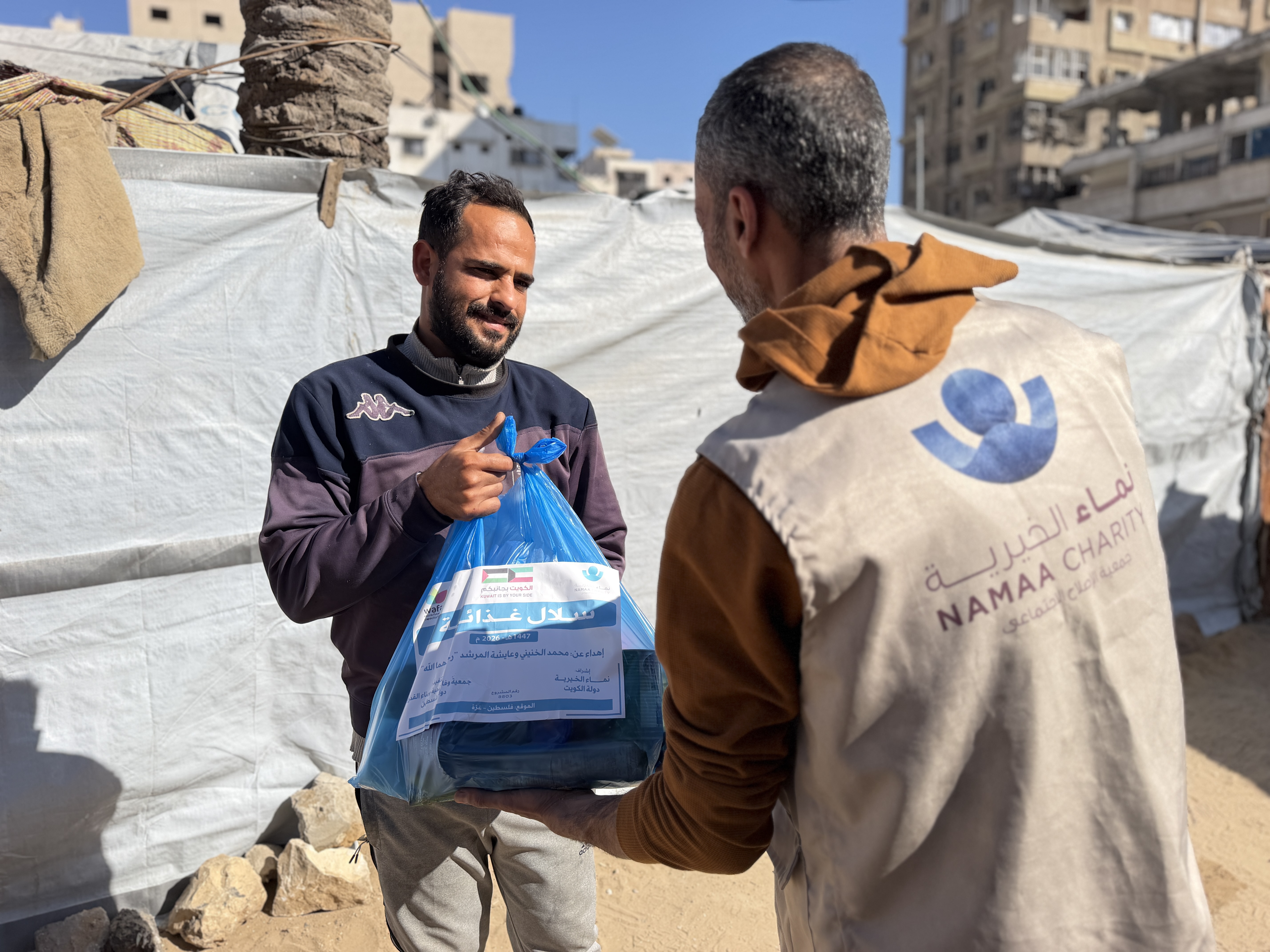
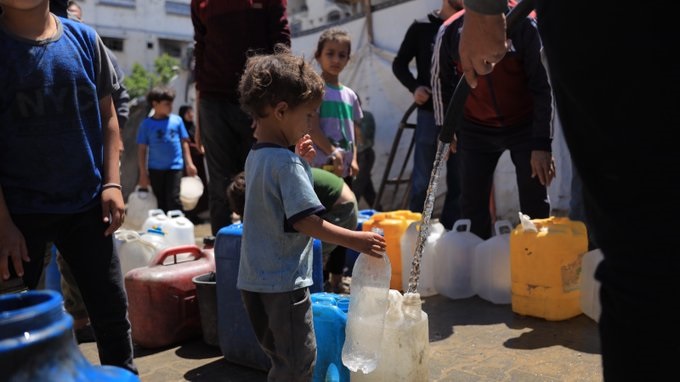
Namaa Charity continues to support Gaza residents by distributing food baskets, benefiting 1,000 people.
More info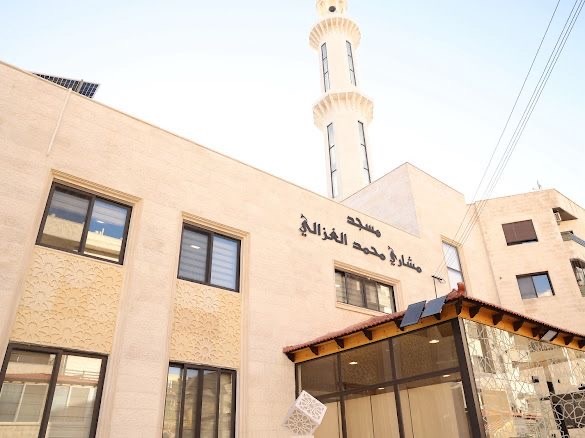
With Kuwaiti support and under the supervision of Namaa Charity, the "Mishari Al-Ghazali" Mosque was inaugurated in Jordan.
More info