 Login
Login Zakat Calculator
 KD
KD

News
UNHCR and Nama’a Charity Sign Agreement to Empower Returnees to Syria
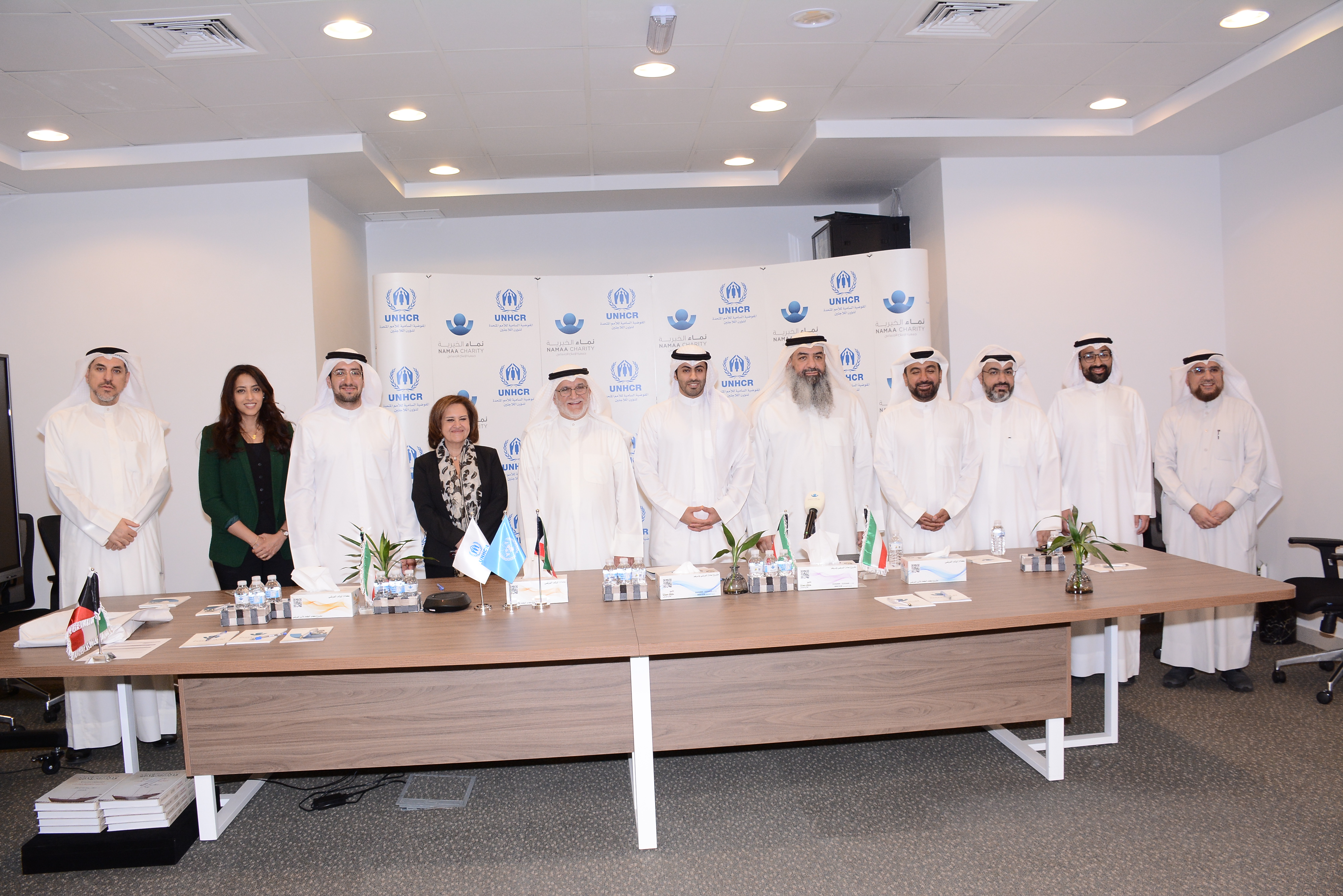
UNHCR and Nama’a Charity Sign Agreement to Empower Returnees to Syria
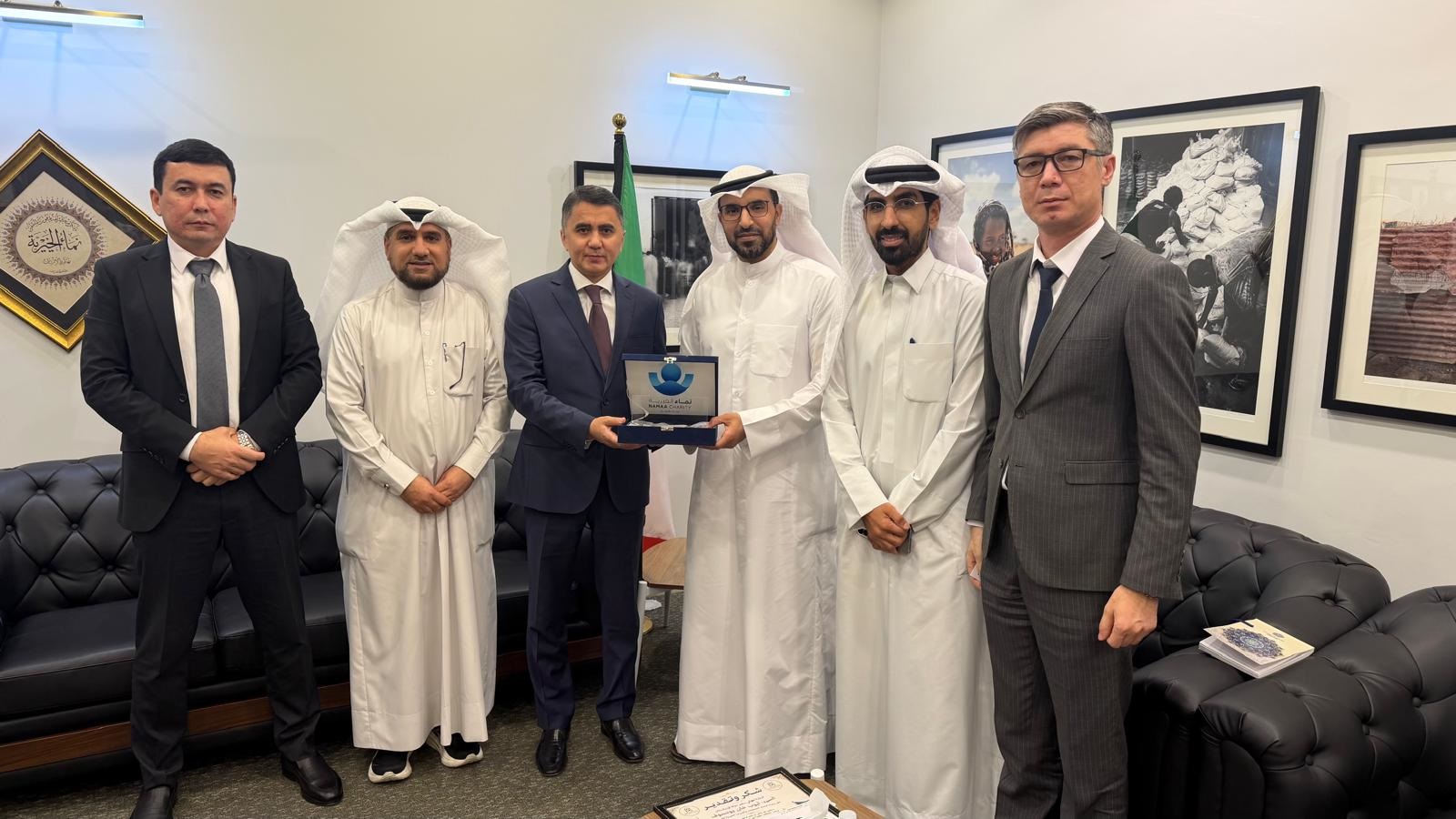
The United Nations High Commissioner for Refugees (UNHCR) and the Social Reform Association (Nama’a Charity) have signed an agreement to empower Syrian refugees through the provision of a cash grant to support their return and reintegration in Syria. The agreement was signed at the charity headquarters in Kuwait by Nasreen Rabee’an, UNHCR Representative in Kuwait, and Saad Al-Otaibi, CEO of Nama’a Charity affiliated with the Social Reform Association.
Under this initiative, UNHCR will provide cash grants to 705 internally displaced and returning families in Syria—totaling approximately 3,525 individuals—to help them meet their daily basic needs and facilitate rebuilding their lives while restoring economic stability.
UNHCR Representative Nasreen Rabee’an expressed her gratitude to Nama’a Charity, stating:
“I am pleased to be here today at the headquarters of the Social Reform Association for the fourth consecutive year, signing a grant agreement that enables UNHCR to support returnees and internally displaced persons in Syria through cash assistance. Our partnership began in 2022, supporting higher education programs for Syrian refugees in Jordan and Lebanon, followed by emergency relief to forcibly displaced individuals in Sudan last year. Nama’a was the first Kuwaiti institution to respond to UNHCR’s appeals, providing timely assistance last year to families in Lebanon to meet their medication and healthcare needs.”
Rabee’an added:
“Syria has suffered immensely since 2011, with more than 16 million people in need. The fall of the Assad government after nearly 14 years of conflict changed the landscape, displacing many across provinces. Some refugees are returning from neighboring countries, placing continued demand on support inside Syria and the region.”
She continued:
“In recent months, we have seen a significant rise in returns: since early December 2024, approximately 354,900 people have crossed back into Syria. UNHCR remains committed to facilitating voluntary, informed, and safe returns, including financial aid and transport assistance.”
Rabee’an concluded:
“Through this generous support, UNHCR will provide cash grants to forcibly displaced and returning families—around 705 families, or approximately 3,525 individuals—helping them rebuild their lives, regain economic stability, and cover monthly expenses. Financial assistance is one of the most effective means of supporting families in Syria, serving as a vital safety net to cover rent, food, transport, household essentials, and medicine during the initial months of return.
In light of escalating humanitarian crises worldwide—with over 120 million refugees and displaced persons—partnerships across all levels of society are more important than ever. Kuwait is an exemplary model in empowering its charitable institutions to play a leading role in solidarity, aligned with the nation’s humanitarian vision. UNHCR hopes this initiative will inspire others to support refugees and internally displaced persons, raise awareness of their plight, and help improve their lives and future prospects.”
Mohammed Al-Omar, Vice President of the Social Reform Association, said:
“This agreement embodies our serious joint commitment to improving the conditions of returning refugees and host communities during this critical period. We recognize the importance of this step for the most vulnerable groups and intend to exert every effort to ensure the agreement’s goals are achieved.”
Al-Omar added that this cooperation between the Social Reform Association and UNHCR sets an example of collective action to do good worldwide. Nama’a Charity in Syria supports families in purchasing goods and services from local businesses, reinforcing the local economy and benefiting communities. This forms a core element of the Association’s vision to support and improve lives across these sectors, working diligently to assist in various areas to improve people’s quality of life.
Yusuf Saif Al-Mutairi, Official Spokesman of the Ministry of Social Affairs, said:
“Charitable work in Kuwait is not merely seasonal or voluntary—it is deeply rooted in our cultural, social, and religious identity. Kuwaitis have been generous since the time of our ancestors, bringing help wherever it is needed. We are talking about a societal phenomenon that has shaped Kuwait as a unique community.”
He continued:
“As Kuwaitis, we are proud of this charitable tradition we have carried across generations. Our people are known for chivalry and initiative in helping the needy, making Kuwait—by the grace of God—the beacon of humanitarian work. I would also like to praise the brave Syrian people who, despite years of war and hardship, have proven to be steadfast and deserving of a new opportunity to rebuild. Kuwait stands with our Syrian brothers and sisters in their time of need, believing that our support is not only moral and humanitarian, but a rightful step toward restoring their homeland, dignity, and stability.”
Al-Mutairi added that under guidance from the Minister of Social Affairs, the ministry is fully committed to supporting Kuwaiti charitable work and enabling it to fulfill its mission amid current challenges by updating policies and procedures to ensure transparency, governance, and sustainable performance. Charitable work is no longer an individual effort—it is a comprehensive developmental project managed scientifically, strategically planned, and monitored by clear indicators.
He also affirmed Kuwait’s commitment as a state and governmental institution to partnerships with international and UN organizations, supporting all efforts in global humanitarian work—an obligation born of Kuwait’s role in the international community and duty toward humanity without discrimination or exclusion. He noted that Kuwait, that blessed land, has always been a source of generosity and a model of humanitarian giving—a fact recognized when the late Emir Sheikh Sabah Al-Ahmad Al-Sabah was honored as the “Humanitarian Leader” by the international community. Today, the mission continues under His Highness Sheikh Mishal Al-Ahmad Al-Jaber Al-Sabah, who continues this blessed legacy with determination and dedication.
Asim Al-Failkawi, Supervisor at the Ministry of Social Affairs’ Charitable Associations Oversight Division, stated:
“We at the Ministry closely monitor all agreements signed by Kuwaiti charitable associations. In this context, we attended the signing between Nama’a Charity (affiliated with the Social Reform Association) and UNHCR, which is a commendable initiative providing real support to our Syrian brothers and sisters returning home to rebuild their cities and communities.”
Saeed Al-Otaibi, President of the Union of Charitable Societies, said:
“This agreement reflects Kuwait’s ongoing charitable and humanitarian journey since its founding. We were raised believing that generosity is a noble responsibility and that giving is an inherent trait of Kuwaitis known for their humanitarian spirit. Wherever there is a need, Kuwaitis stand by those in need, with God's help.”
Al-Otaibi noted that the agreement highlights multiple vital dimensions: firstly, the humanitarian dimension, reaffirming that Kuwait will remain a leading presence in humanitarian relief, and that its charitable societies are consistently at the forefront of aiding the afflicted and needy, particularly in war-torn Syria.
He explained that this agreement is the fruit of cooperation between local and international institutions, reflecting the high professionalism and sound governance of our charities. This trust makes them reliable partners for regional and international organizations, thanks to their adherence to legal and ethical standards. He added that this step is a manifestation of the wise leadership’s vision for Kuwait to always remain a country of humanity—achieved through its official institutions, charitable societies, and the kindness of its people.
He emphasized that the financial assistance provided through the agreement is not only emergency support but a means to enable Syrian families to regain economic and social stability and embark on a new, dignified, and self-reliant life—one of the strategic objectives of the Union of Charitable Societies.
Abdulaziz Al-Kandari, Deputy CEO of Nama’a Charity, said:
“This agreement embodies a genuine strategic partnership. Since 2022, we began working with UNHCR to support Syrian students in Jordan and Lebanon, then provided emergency relief in Sudan, culminating today in support for displaced and returnee families within Syria. This journey underscores Nama’a Charity’s belief in the importance of building strong relationships with highly credible international organizations to achieve impactful humanitarian outcomes.”
He explained that this agreement extends beyond immediate aid to include cash grants that assist Syrian families in rebuilding their lives and regaining economic and social stability, facilitating a dignified return and relieving them of long-standing hardship.
Al-Kandari noted that this initiative continues Kuwait’s humanitarian leadership, positioning the country consistently at the forefront of aiding the vulnerable. Kuwait remains a model in supporting the oppressed through a long tradition of giving without expectation or prejudice.
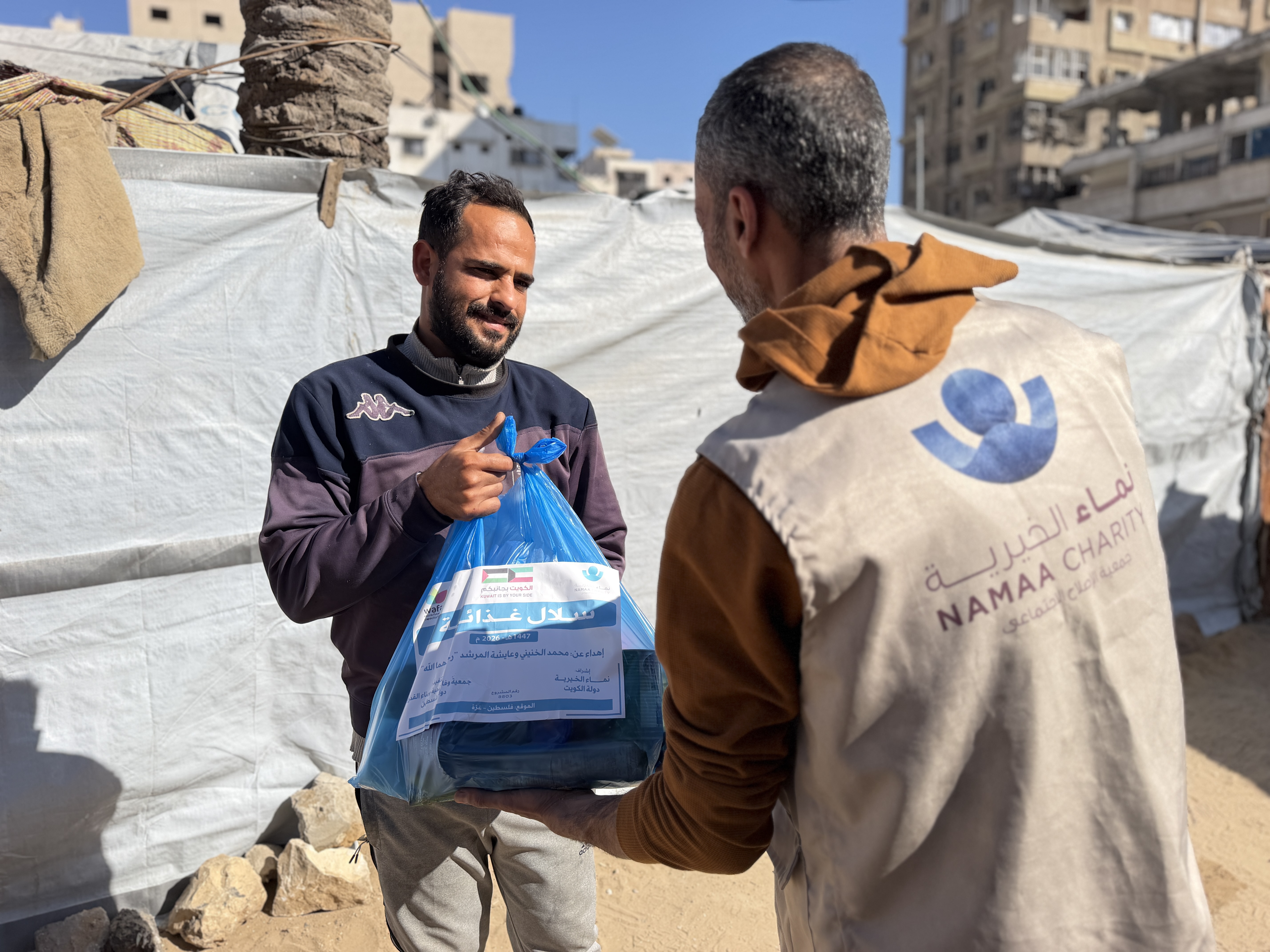
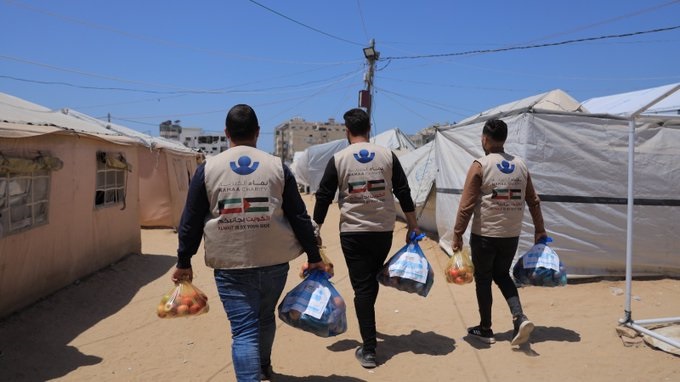
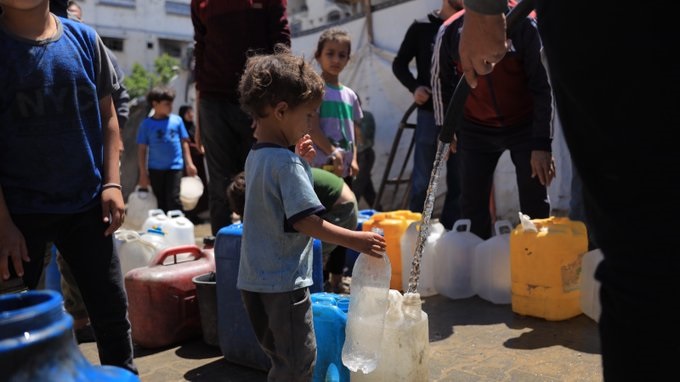
Namaa Charity continues to support Gaza residents by distributing food baskets, benefiting 1,000 people.
More info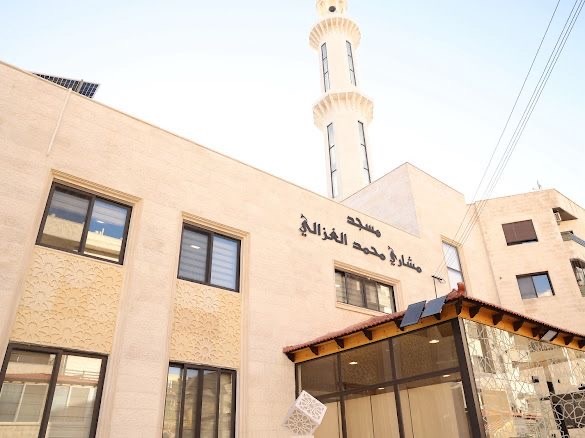
With Kuwaiti support and under the supervision of Namaa Charity, the "Mishari Al-Ghazali" Mosque was inaugurated in Jordan.
More info