 Login
Login Zakat Calculator
 KD
KD

News
Namaa Charity, affiliated with the Social Reform Society, affirms Kuwait's leading role in reform during the Unified Gulf Week for Inmates
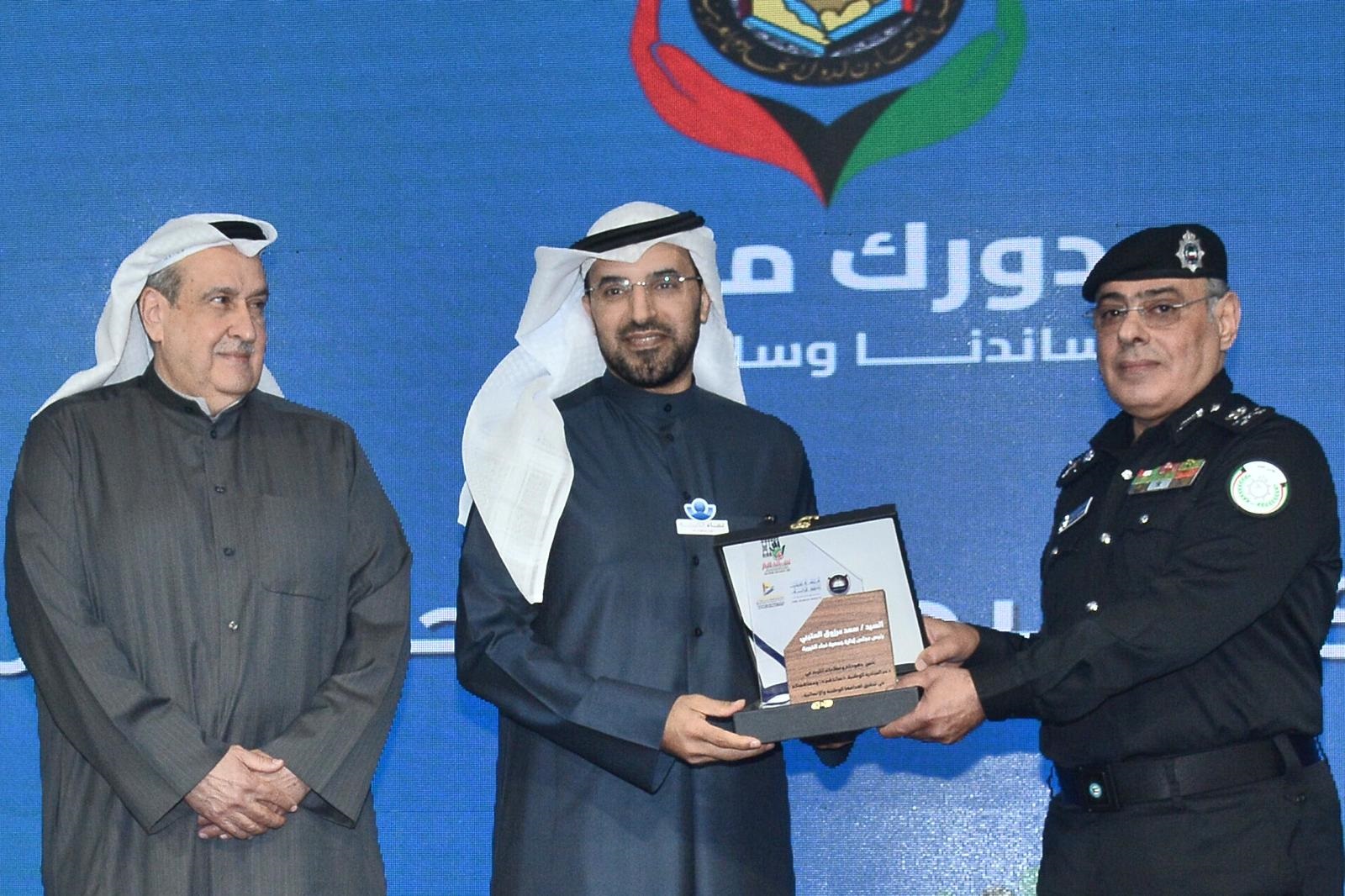
In a scene reflecting the maturity of the Gulf experience in reform work, and Kuwait's commitment to embedding the humanitarian dimension within the justice system, the General Directorate of Correctional Institutions at the Ministry of Interior hosted the Unified Gulf Week for Inmates. The event, attended by a wide range of officials, human rights representatives, and members of the community, embodied the integration of roles between security and human rights institutions and civil society, and affirmed that true reform begins with the individual and culminates in the stability of society.
A Gulf Event with a Humanitarian Vision
The Unified Gulf Week for Inmates is an annual event of profound significance. It aims to highlight the efforts made in developing correctional environments, enhancing rehabilitation programs, and exchanging expertise among the Gulf Cooperation Council (GCC) countries, in accordance with established human rights standards. It reflects a shared Gulf belief that an inmate is not merely a number in a file, but a human being deserving of care, empowerment, and a new opportunity for life. Ministry of Interior: Reform is a National and Moral Responsibility
In a comprehensive address, Brigadier General Osama Al-Majed, Acting Director General of the General Department of Correctional Institutions, affirmed that the Ministry of Interior's vision stems from a firm conviction that correctional institutions are not merely places of punishment, but rather environments of reform, development, and rehabilitation. He emphasized that the care and rehabilitation of inmates is a national and moral responsibility that directly contributes to strengthening security and societal stability.
He explained that the State of Kuwait, under the leadership of His Highness the Emir, may God protect him, has established a steadfast humanitarian approach based on preserving human dignity and guaranteeing the rights enshrined in the Constitution and the law. This is reflected in the comprehensive development of the correctional system, whether in terms of infrastructure, programs, or human resources.
He noted that the Ministry of Interior has given considerable attention to modernizing correctional institutions, raising the efficiency of their staff, and activating psychological, social, educational, and vocational rehabilitation programs, believing that justice is incomplete without rebuilding the individual and enabling their positive reintegration into society. Comprehensive Educational and Rehabilitation Programs
He explained that the General Directorate of Correctional Institutions has provided a comprehensive package of educational programs, including literacy programs, formal education, and distance university education, in addition to vocational and technical training programs. These programs aim to equip inmates with practical skills that contribute to their self-reliance after release and facilitate their reintegration into the labor market and society.
Correctional institutions also pay special attention to providing comprehensive healthcare, psychological and social support, and implementing religious and awareness programs that promote the concepts of moderation and balance, and contribute to correcting misconceptions, thus supporting the inmate's behavioral and intellectual reform.
National Human Rights Bureau: A Partnership Based on International Standards
For his part, Commissioner Anas Al-Shaheen, Head of the Tripartite Committee for the Management of the National Human Rights Bureau, affirmed that his participation in the Unified Gulf Week for Inmates stems from his national role in protecting and promoting human rights, particularly the rights of inmates in correctional institutions. He emphasized that this event represents an advanced model of integration between security, human rights, and social entities.
The Audit Bureau commended the efforts of the General Directorate of Correctional Institutions in developing the correctional environment, emphasizing that institutional partnerships between government agencies, civil society organizations, academic institutions, and the private sector are fundamental pillars for the success of reform and rehabilitation programs and achieving sustainability.
In this context, the event honored donors and supporters of construction projects within correctional institutions, in recognition of their contributions to improving the quality of services provided to inmates and enhancing the humane environment within these institutions, under the umbrella of the national initiative "Support Them."
United Nations: International Support for the Reform Approach and Second Chance
The representative of the United Nations Office in Kuwait, Nasser Al-Shatti, affirmed that the organization's participation in this event reflects its appreciation for Kuwait's pioneering experience in the field of reform and rehabilitation. He noted that the "Support Us and Support Them" initiative represents a national model to be emulated in strengthening partnerships between government agencies, civil society organizations, and international organizations.
He explained that the United Nations' support for this initiative is in line with the Standard Minimum Rules for the Treatment of Prisoners (the Nelson Mandela Rules), the Sustainable Development Goals, and the "New Kuwait 2035" vision, which places human beings at the heart of development. He emphasized that integrated rehabilitation programs have proven globally effective in reducing recidivism rates, enhancing community security, and strengthening social cohesion. He affirmed the United Nations' commitment to continuing technical support and exchanging expertise to develop these programs according to best international practices.
On the sidelines of the event, Namaa Charity, affiliated with the Social Reform Society, inaugurated several projects within correctional facilities. Abdulaziz Al-Kandari, Deputy CEO of Namaa Charity, stated that Namaa's participation in the Unified Gulf Week for Inmates stems from its deep belief that true charitable work is not limited to material support, but extends to human development, enhancing capabilities, and opening windows of hope for inmates to become active members of their communities. Al-Kandari explained that Namaa Charity ensured its contribution to this event was high-quality and impactful, through the construction of football fields that contribute to improving the physical and mental health of inmates and instilling values of discipline and teamwork. Additionally, the organization of a spring camp provided a positive and supportive environment for inmates, helping to alleviate their isolation and foster social balance.
He emphasized that integrated rehabilitation programs have proven globally effective in reducing recidivism rates, enhancing community security, and strengthening social cohesion. He affirmed the United Nations' commitment to continuing technical support and exchanging expertise to develop these programs according to best international practices.
On the sidelines of the event, Namaa Charity, affiliated with the Social Reform Society, inaugurated several projects within correctional facilities. Abdulaziz Al-Kandari, Deputy CEO of Namaa Charity, stated that Namaa's participation in the Unified Gulf Week for Inmates stems from its deep belief that true charitable work is not limited to material support, but extends to human development, enhancing capabilities, and opening windows of hope for inmates to become active members of their communities. Al-Kandari explained that Namaa Charity ensured its contribution to this event was high-quality and impactful, through the construction of football fields that contribute to improving the physical and mental health of inmates and instilling values of discipline and teamwork. Additionally, the organization of a spring camp provided a positive and supportive environment for inmates, helping to alleviate their isolation and foster social balance.
He pointed out that the vocational and craft workshops established by Namaa Charity on the sidelines of the event represent a cornerstone of practical rehabilitation. These workshops aim to equip inmates with real professional skills that will help them become self-reliant after their release and facilitate their positive reintegration into the labor market and society.
Al-Kandari added that the Namaa Charity delegation visited the public prison camp and the women's camp, closely observing the needs of the male and female inmates. This reflects Namaa's commitment to the comprehensiveness of its humanitarian programs and its consideration of the social and psychological needs of all groups, in line with its mission to uphold human dignity without discrimination.
He emphasized that this participation comes within the framework of an active partnership with the Ministry of Interior and relevant authorities, and within Namaa Charity's vision to support rehabilitation and reform programs and promote the concept of "second chances." He stressed that empowering inmates is a true investment in the security and stability of society. Al-Kandari concluded his statement by emphasizing that Namaa Charity will continue its pioneering role in supporting reform and humanitarian initiatives, working alongside its partners to establish an approach that rebuilds individuals and creates a lasting positive impact on society.
Saad Marzouq Al-Otaibi, Chairman of the Union of Charitable Societies and Foundations, affirmed that the activities of the Unified Gulf Week for Inmates represent a significant milestone in the joint Gulf reform efforts. He stated that these activities reflect the awareness of the Gulf Cooperation Council (GCC) countries regarding the importance of developing rehabilitation and care systems within correctional institutions. This development reinforces the humanitarian dimension, preserves the dignity of inmates, and enhances their opportunities for reintegration into society.
Al-Otaibi explained that the high-quality initiatives witnessed during the event, including the construction of football fields, a spring camp, and vocational and craft workshops, confirm that reform is no longer a theoretical concept, but a practical practice implemented on the ground through programs that contribute to the psychological, behavioral, and professional development of individuals, providing them with real tools for a fresh start after their release. He noted that the visit to the public prison camp and the women's camp reflects the comprehensiveness of the reform vision and the commitment of the participating entities to assess the needs of male and female inmates firsthand, providing programs that respect human and social privacy and recognize that justice is incomplete without care and inclusion.
Al-Otaibi added that this model of integration between state institutions, charitable organizations, and civil society organizations is the cornerstone of successful rehabilitation programs. He emphasized that effective institutional partnerships can transform correctional facilities into platforms for human development, not merely places for carrying out punishment.
He stressed that supporting and rehabilitating inmates is a direct investment in the security and stability of society, and that empowering them with skills, employment, and positive integration reduces the chances of recidivism and strengthens values of responsibility and belonging.
Al-Otaibi concluded his statement by affirming that these efforts reflect the deeply rooted humanitarian approach of the State of Kuwait, under the leadership of His Highness the Emir, may God protect him. He called for continued joint Gulf cooperation and the expansion of these high-quality initiatives to serve as a regional model for reform, rehabilitation, and human development.
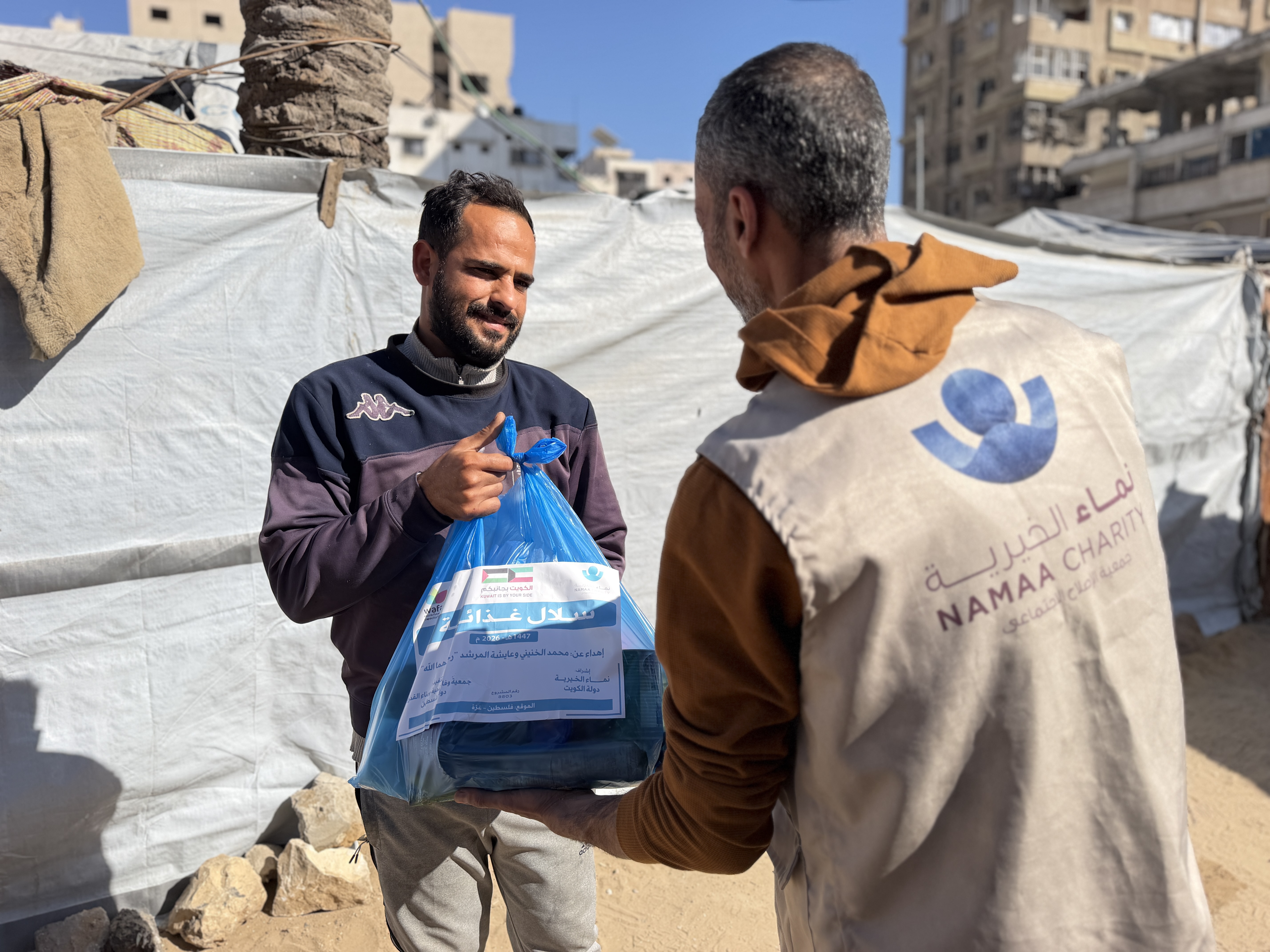
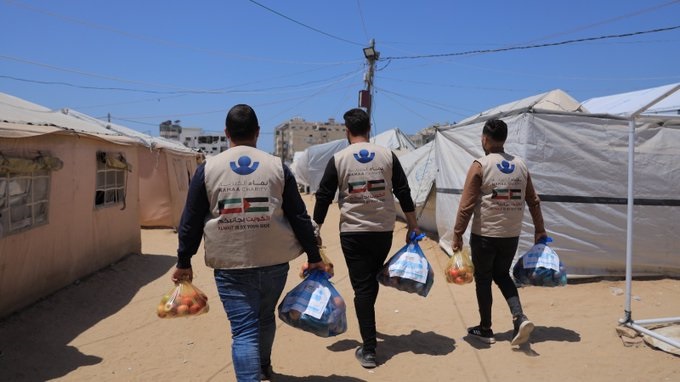
Namaa Charity continues to support Gaza residents by distributing food baskets, benefiting 1,000 people.
More info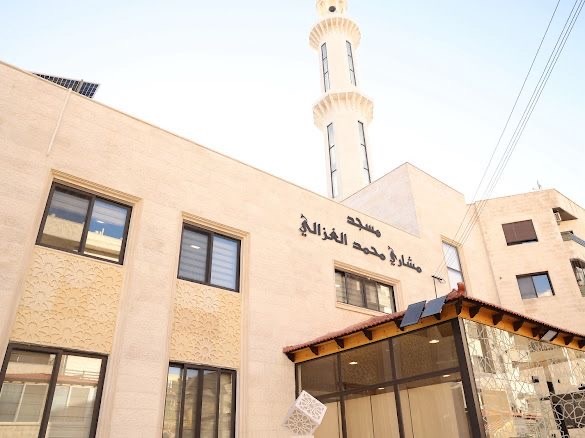
With Kuwaiti support and under the supervision of Namaa Charity, the "Mishari Al-Ghazali" Mosque was inaugurated in Jordan.
More info