 Login
Login Zakat Calculator
 KD
KD

News
Namaa Charity: Tents for displaced people in the northern Gaza Strip
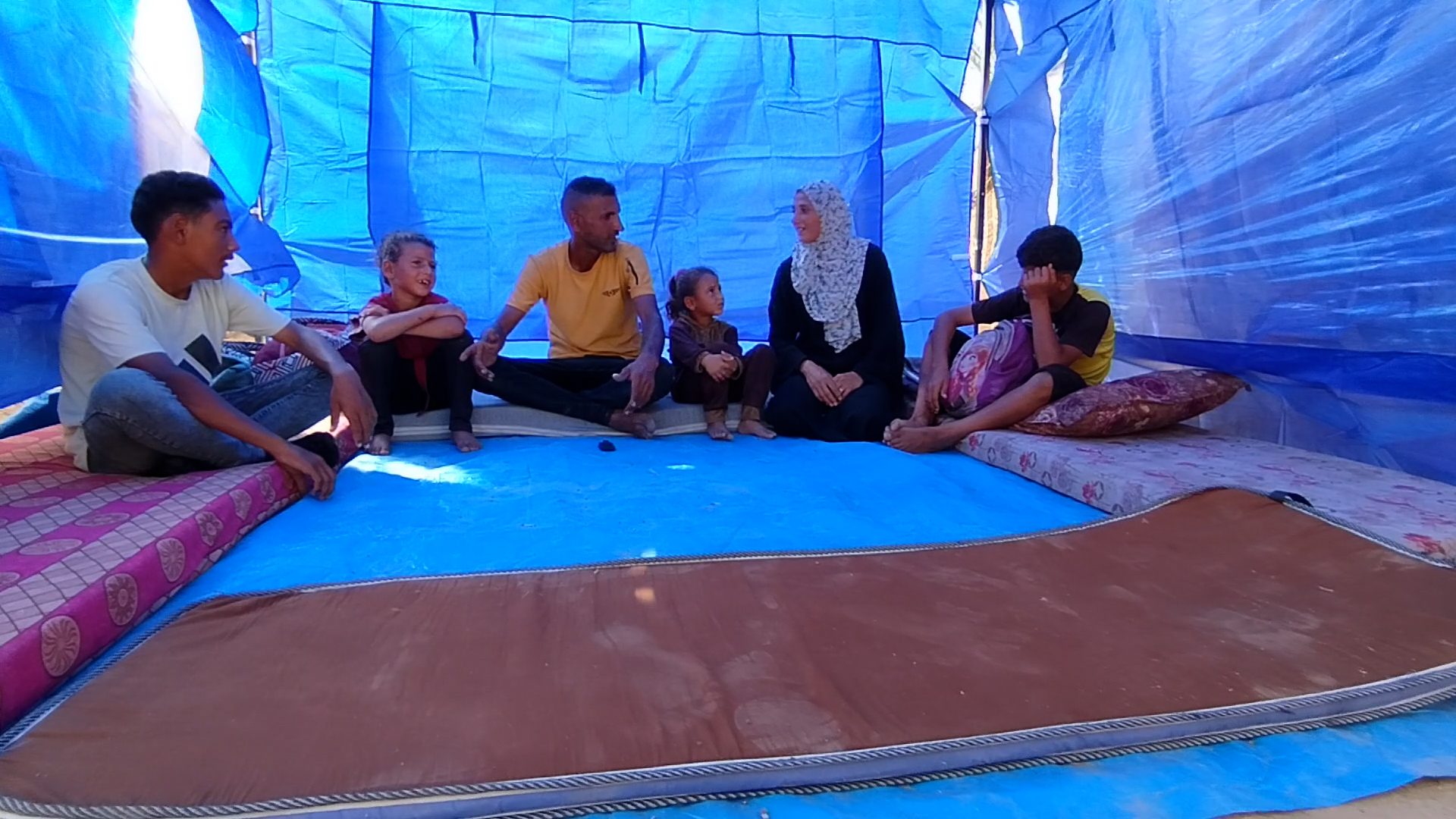
As the humanitarian crisis in the Gaza Strip worsens daily, and the cries for help from displaced families who have lost their homes and safety grow louder, Namaa Charity – affiliated with the Social Reform Society – announced the launch of the first phase of its new relief project, “For Gaza.” This project is considered one of the most important humanitarian initiatives aimed at restoring hope and providing safe shelter for dozens of families affected by the bombing in the northern Gaza Strip.
This project complements Kuwait’s ongoing campaigns to aid the Palestinian people and embodies its humanitarian standing, which its leaders and people have established over decades. Kuwait has never been distant from Gaza; rather, it has always been present on the ground, demonstrating action before words, giving before statements, and achieving before announcements.
In an urgent response to the appeals for help, under the title “For Gaza,” Namaa Charity launched a large-scale campaign aimed at providing urgent humanitarian interventions in three main areas: shelter, food, and water. Saad Marzouq Al-Otaibi, CEO of Namaa Charity, stated in a press release: “This shelter project is an urgent response to the growing humanitarian appeals in Gaza, where hundreds of thousands of families are living without shelter after their homes were completely destroyed, in a scene that reflects one of the greatest humanitarian disasters of the modern era.”
Al-Otaibi explained that the project’s first phase aims to provide more than 100 fully equipped shelter tents in northern Gaza, in cooperation with local organizations accredited by the Kuwaiti Ministry of Foreign Affairs. This ensures that aid reaches those truly in need with transparency and fairness.
He added: “We are not just providing tents; we are offering a dignified temporary life that preserves people’s right to safety and privacy. These tents are not merely shelter; they are a humanitarian message that there are those who feel the pain of Gaza and who strive to restore some of its lost dignity.” Shocking UN Figures and a Tragic Reality
According to reports from the United Nations Office for the Coordination of Humanitarian Affairs (OCHA) and UNRWA, more than 1.9 million people – equivalent to 85% of the population of the Gaza Strip – have been forcibly displaced from their homes since the start of the war. More than half of them are living in the open or in makeshift tents that lack even the most basic protection from the heat or cold.
Other UN data confirms that 60% of housing facilities have been completely or partially destroyed, making the need for shelter one of the most urgent requirements, in addition to the shortages of food, potable water, and basic medical services.
Al-Otaibi said: “What we are witnessing today in Gaza is not merely a humanitarian crisis, but a major tragedy that affects human existence itself. When people are uprooted from their homes and lose their shelter and security, we cannot simply watch or offer sympathy from afar; we must take action.” Trusted Partnerships and Government Oversight
The CEO of Namaa Charity emphasized that the project was implemented according to the highest international humanitarian standards. Full coordination was maintained with the Kuwaiti Ministry of Foreign Affairs and the Ministry of Social Affairs to ensure the project's implementation within a legal and regulatory framework that fosters trust and demonstrates the transparency of Kuwaiti charitable work.
Al-Otaibi added that the project was implemented in partnership with trusted local organizations within the Gaza Strip that possess extensive field experience in crisis management. He affirmed that the distribution process was directly supervised by specialized teams to guarantee equitable delivery of aid to the most affected families.
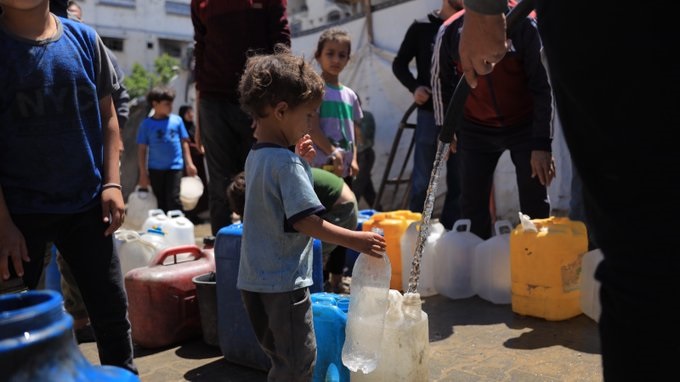
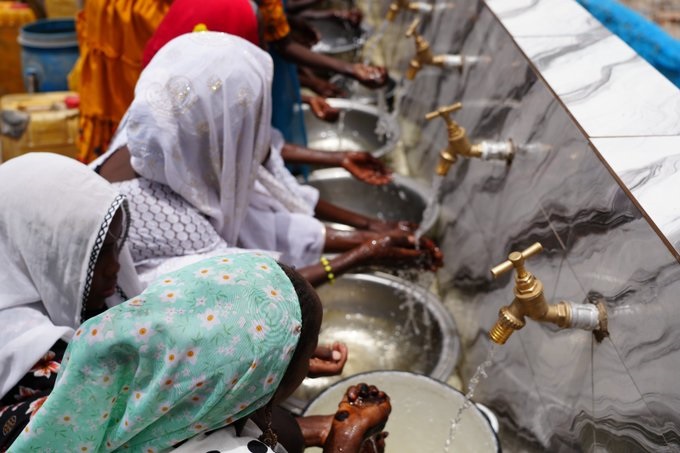
He explained that the tents were equipped with heat and moisture insulation materials and provided with essential supplies such as blankets, mattresses, and personal hygiene kits, in addition to drinking water filling points to ensure a minimum standard of living for displaced families.
From Emergency Relief to Sustainable Development
Al-Otaibi clarified that the shelter project is not an isolated emergency measure, but rather part of Namaa Charity's long-term vision to support Gaza through integrated programs in the areas of food, water, health, and education. He said, “We believe that relief is not the end goal, but the beginning. Our goal is not just to alleviate hunger or provide shelter, but to empower people to live with dignity. Our projects in Gaza range from emergency relief to sustainable development that builds human capital and restores hope in the community.”
He emphasized that Namaa Charity operates according to a professional institutional system based on proactive planning, efficient resource management, and meticulous monitoring of the impact on the ground, to ensure that every dinar spent leaves a real mark on the lives of affected families.
For his part, Khaled Al-Shamri, Head of Projects and Development at Namaa Charity, said that the “For Gaza” project is not merely a fundraising campaign, but a humanitarian message representing Kuwait’s voice to the world.
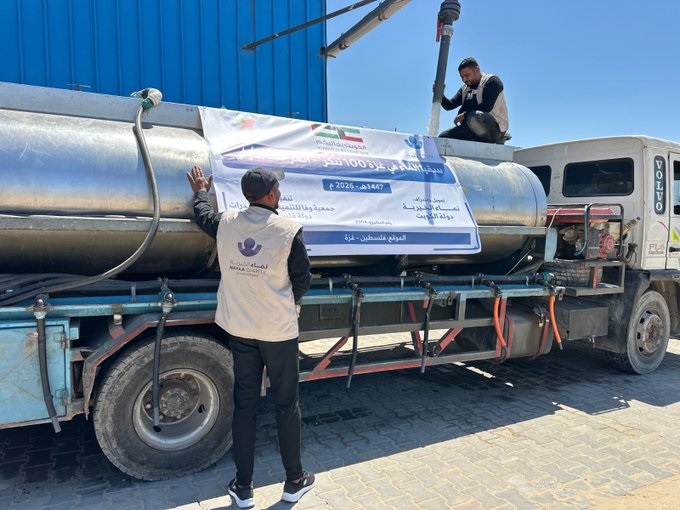
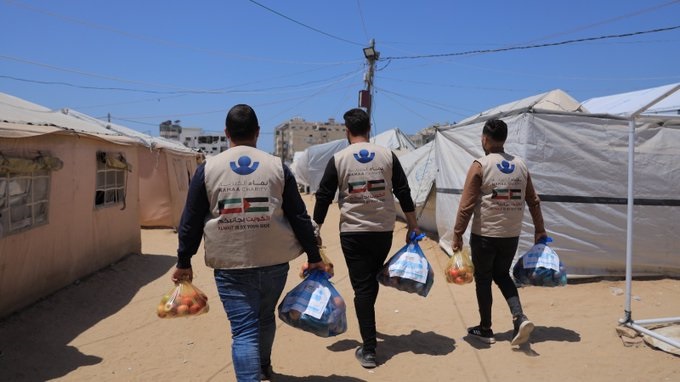
He added, “Gaza today does not need slogans, but rather those who will extend a helping hand. Our project at Namaa Charity was born from a sense of responsibility and from our understanding that we are part of a nation that does not sleep while its brothers and sisters suffer.” Al-Shamri explained that the campaign also includes providing daily ready-made meals to residents in shelters, distributing comprehensive food baskets to impoverished families, and deploying water tankers to fill water tanks in areas where infrastructure has been completely destroyed.
He pointed out that international reports indicate that more than 80% of Gaza's population suffers from food insecurity, and that more than half of the children suffer from acute or chronic malnutrition, making humanitarian intervention a moral imperative before it is an institutional matter.
Official Cooperation and Institutional Integration
Al-Shamri praised the significant governmental support that Kuwaiti charities receive from official bodies, saying, "What distinguishes Kuwaiti charitable work is its integration between the state and civil society. These charities operate under the umbrella of the Ministry of Social Affairs and the Ministry of Foreign Affairs within a unified system that translates Kuwait's humanitarian values into tangible reality."
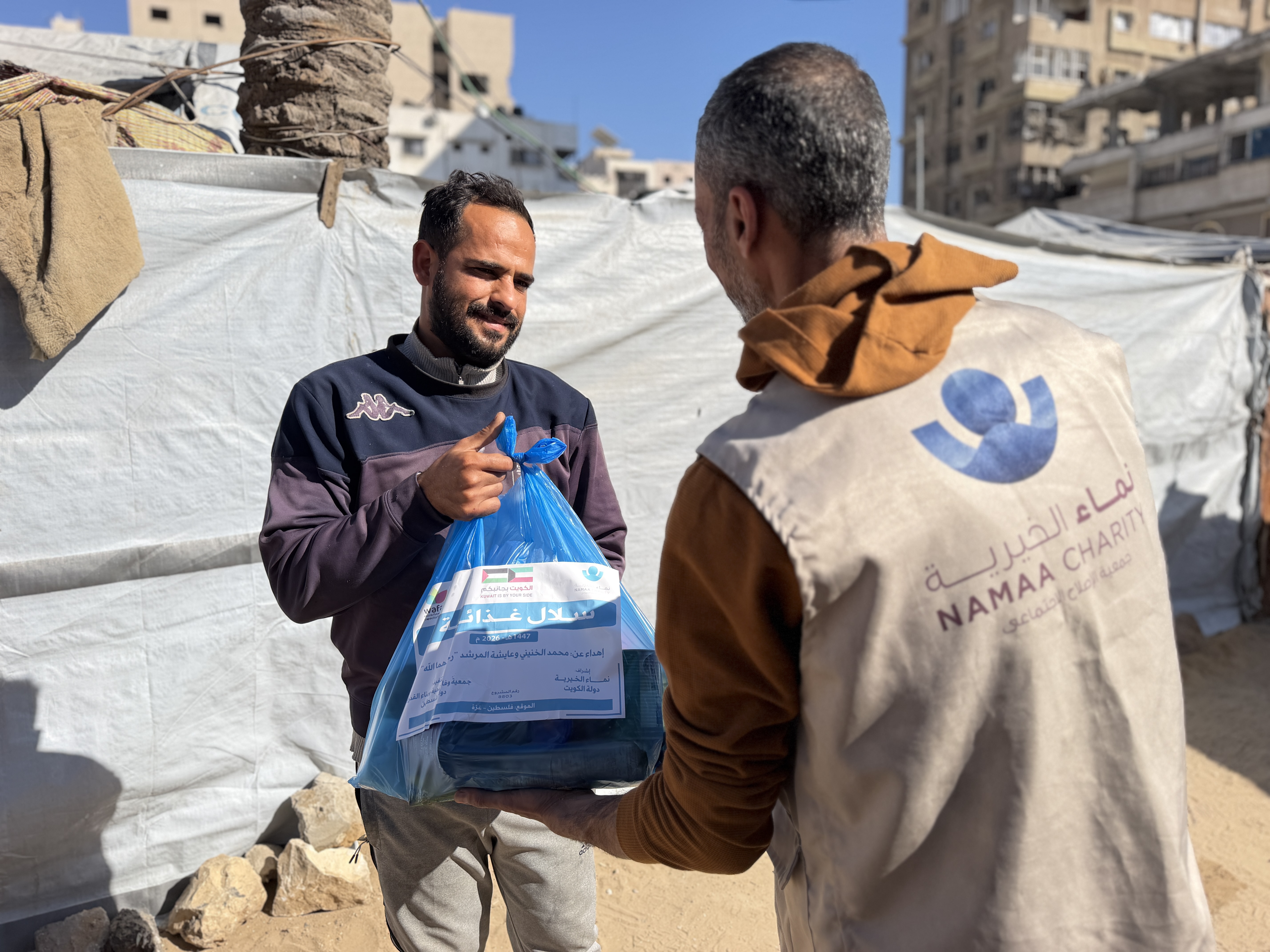
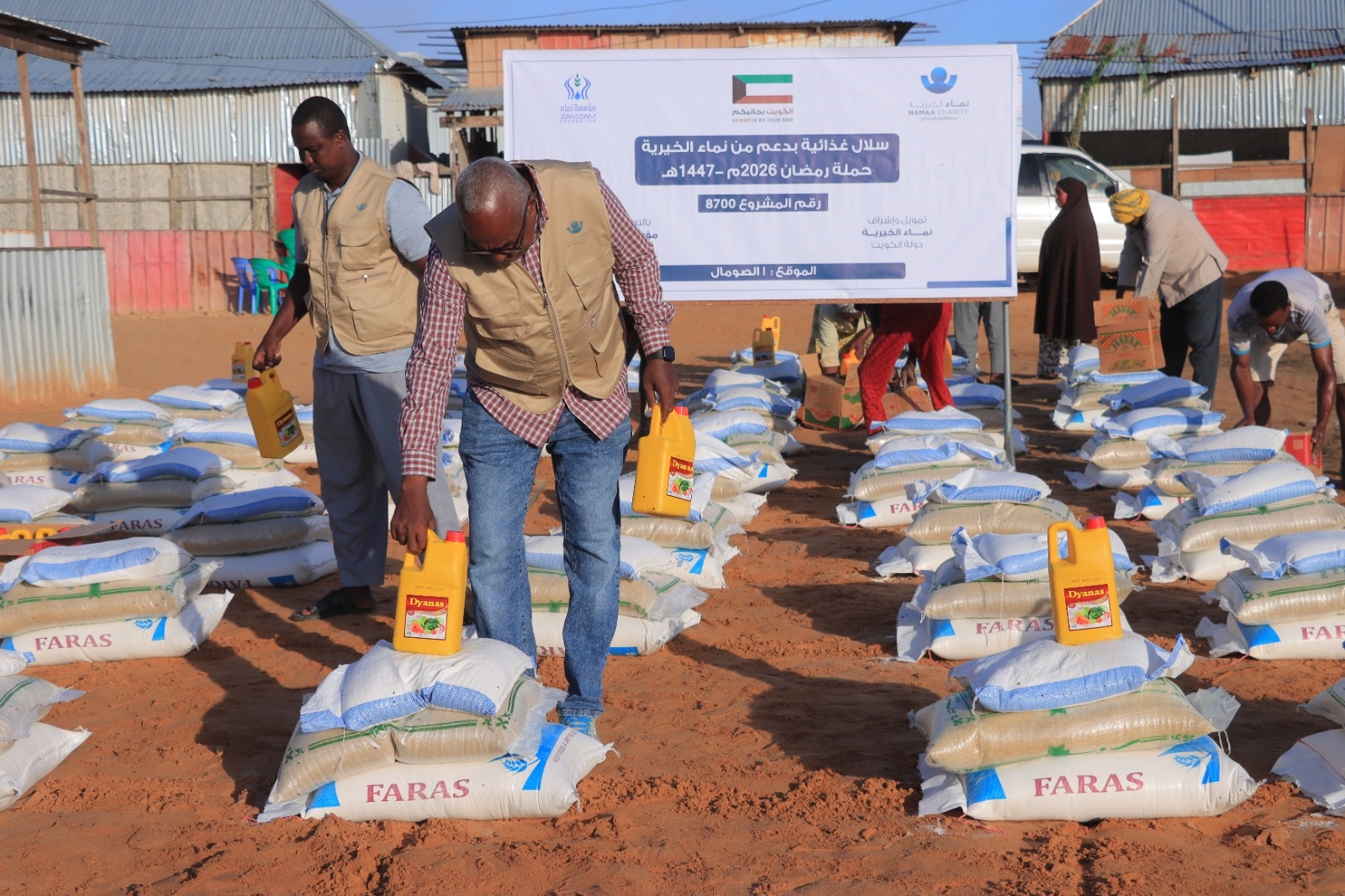
Namaa Charity continues to support Gaza residents by distributing food baskets, benefiting 1,000 people.
More info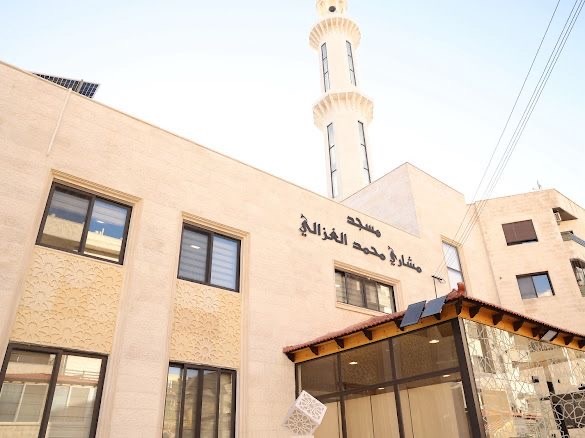
With Kuwaiti support and under the supervision of Namaa Charity, the "Mishari Al-Ghazali" Mosque was inaugurated in Jordan.
More info